What to Expect Your First Month of CrossFit (So You Stop Dreading Day One)
Quick answer: Your first month at HYTE CrossFit starts with one-on-one coaching, not a group class. Week 1 is four private sessions to learn the fundamentals plus a goal-setting and body composition meeting. Week 2 is your first regular class, fully scaled to your fitness level. By week 4, most new members feel at home in the community and have a clear plan in place.
You've probably pictured it: ropes, tires, people throwing barbells around like it's nothing, someone yelling "GO" while you're still trying to figure out which end of the kettlebell to hold. It's the number one reason people put off walking through the door — not lack of motivation, but fear of looking lost on day one.
Here's the truth: almost everyone who walks into HYTE CrossFit for the first time feels exactly that way. And almost everyone is surprised by how different it actually is. Here's what your first month really looks like, week by week.
Week 1: You Don't Start in a Group Class — You Start One-on-One
This is the part most people don't expect. You don't walk in on day one and get dropped into a class full of strangers already mid-workout. New members start with a dedicated Onboarding Program: four one-on-one sessions with a coach, just you and them.
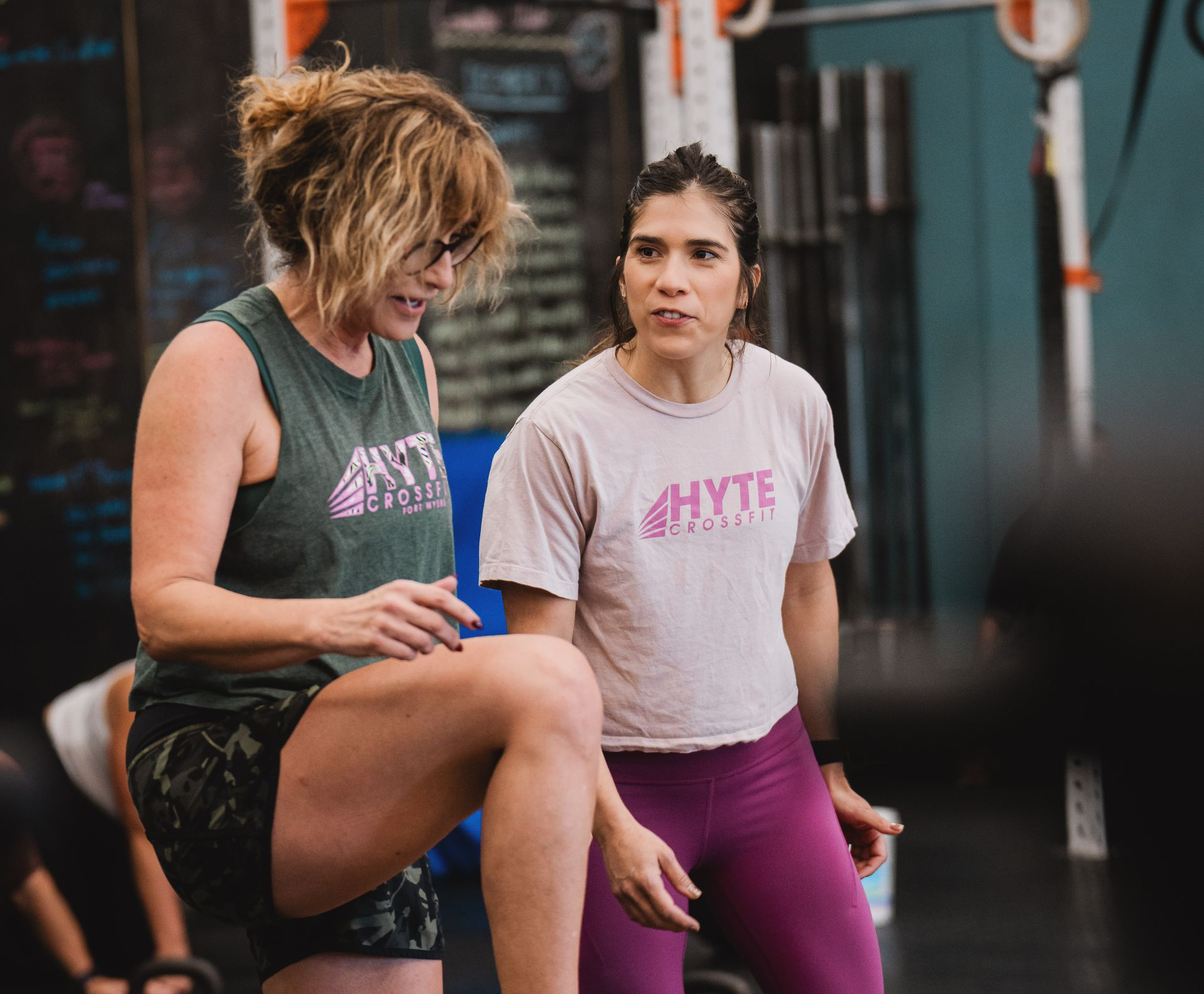
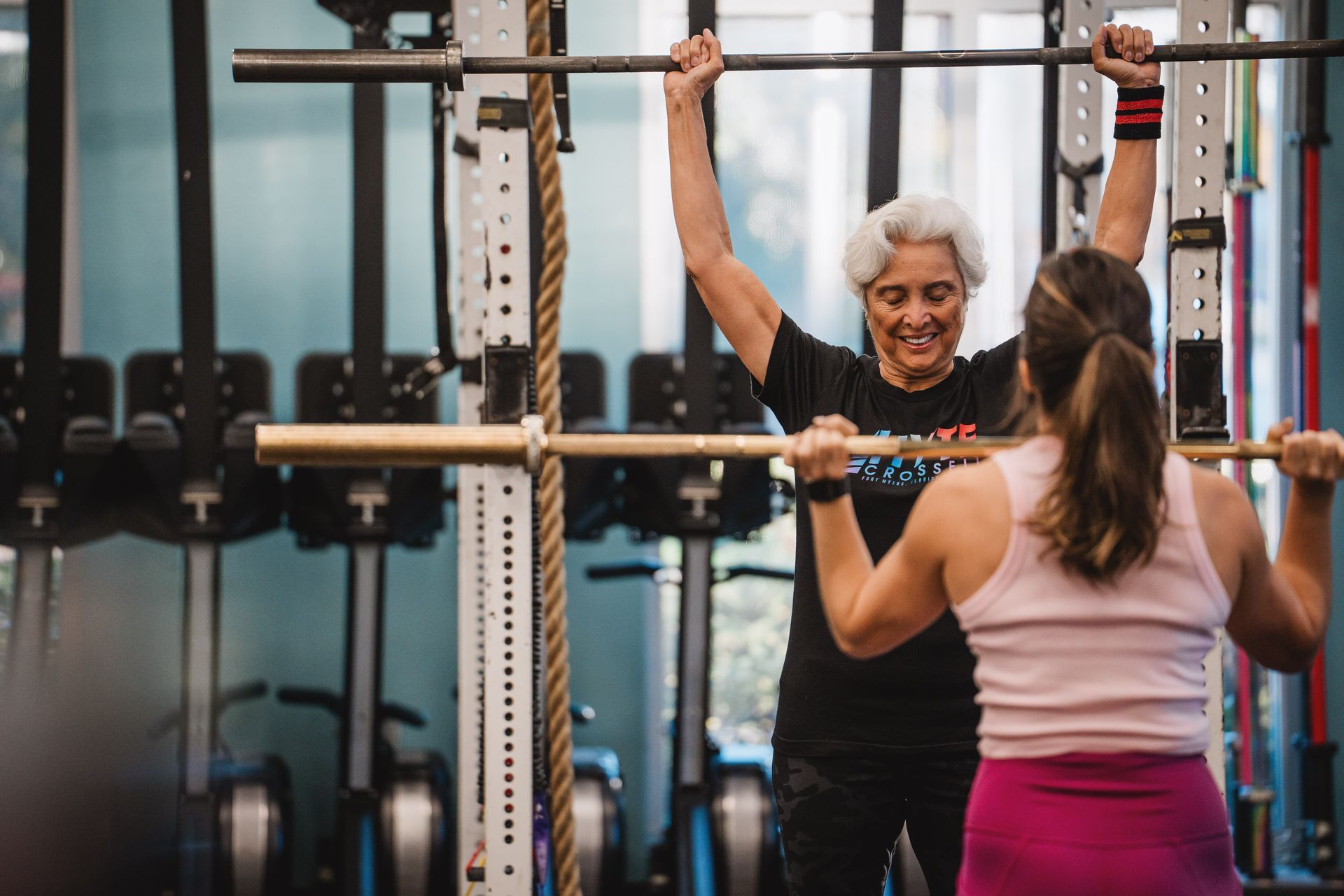
Over those four sessions, you'll learn the CrossFit fundamentals — the core movement patterns (squat, hinge, press, pull) — at your own pace, with a coach correcting your form in real time before you ever load a barbell in a group setting. You'll also do your first actual CrossFit-style workouts during these sessions, but alongside your coach, not against a clock full of people who've been training for years.
Somewhere in this first week, you'll also sit down for a goal-setting meeting. This is where a coach gets to know what you actually want out of training, does a body composition scan so you have a real baseline (not a guess), and builds a workout plan around your goals — whether that's fat loss, strength, showing up for your kids, or training for something specific like HYROX.
What to expect: one-on-one coaching, zero pressure to "keep up" with anyone, and a clear plan by the end of the week instead of a vague sense of what you're supposed to be doing.
Week 2: You Join Regular Classes — and Everything Is Scaled to You
By week two, you've already learned the fundamentals and done real workouts with a coach one-on-one, so walking into your first group class isn't the leap it would've been on day one. You already know the movements, the language, and what a warm-up looks like.
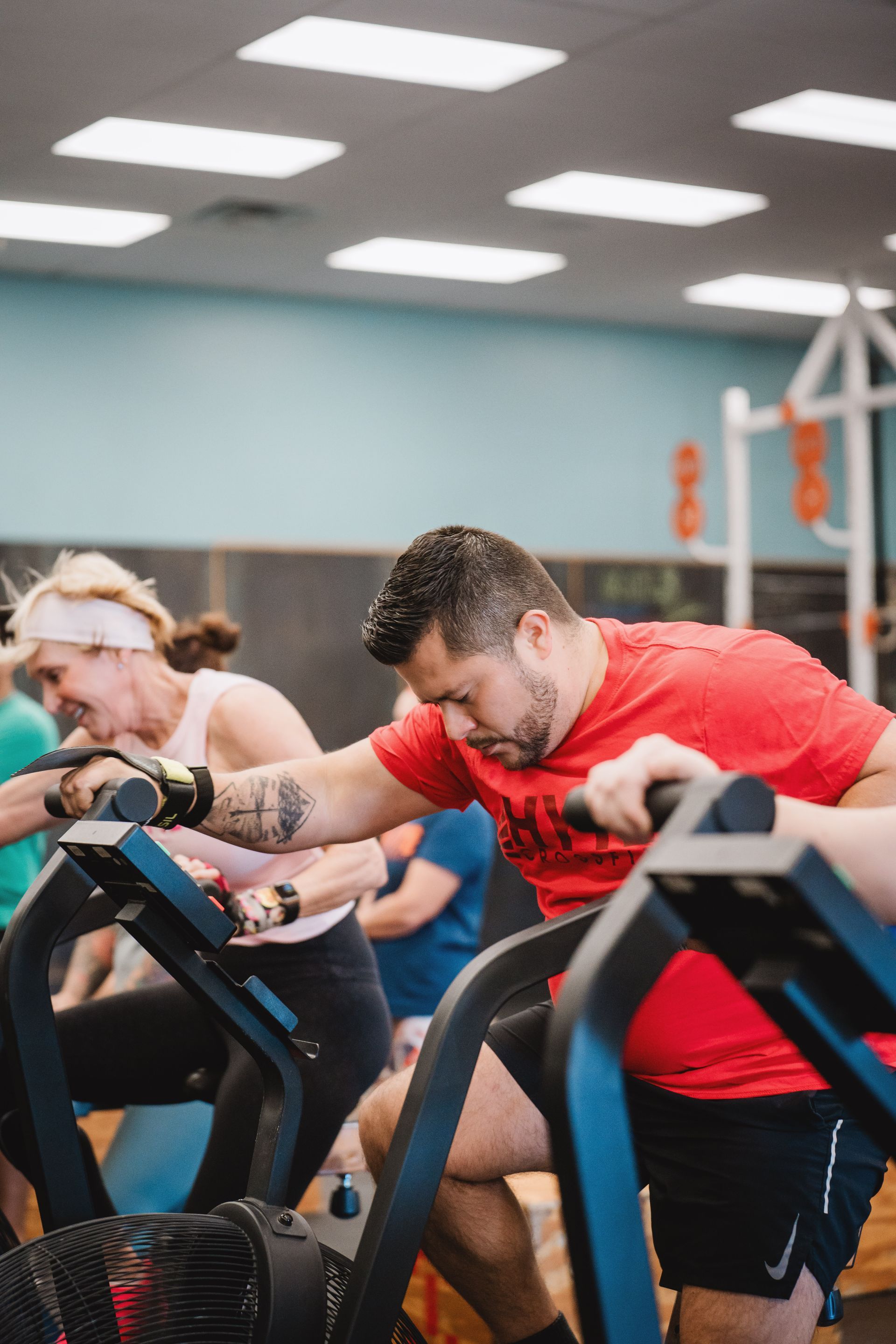
What changes is the room — now you're training alongside other members in a regular class. And coaches scale every workout to you. "Scaling" just means the workout is adjusted to your current fitness and experience — lighter weight, fewer reps, a modified movement — so you get the same stimulus and the same sense of finishing strong as someone who's been training for years. The person next to you doing a different variation isn't "ahead" or "behind" you; everyone in the room is training at their own level, every single day.
What to expect: some nerves walking into your first group class, but far less than you'd feel walking in cold — because you've already done the hard part of learning the movements one-on-one.
Week 3: The Movements Start Clicking, and You Notice the Community
This is usually when the fog lifts in group class. The warm-up stops feeling foreign. You recognize exercise names — a "clean," a "wall ball," a "burpee" — instead of scanning the room to see what everyone else is doing. Your body starts remembering positions instead of your brain having to think through every rep.
Something else starts happening that has nothing to do with fitness: people start cheering for you during the last few reps. Someone remembers you were sore last time and asks how you're feeling. You realize you're not grinding through a workout alone — you're doing it alongside people who want you to finish.
This is the part that's hardest to explain to someone who hasn't tried it yet, and it's usually the reason people who were terrified to start end up not wanting to miss a day.
Week 4: You Revisit Your Plan
By the end of your first month, you're training in regular classes with a real sense of your own numbers — what you can lift, how you pace a workout, which movements you want to improve. Because you already did a goal-setting session and body composition scan in week one, your coach has a baseline to check progress against instead of starting from scratch. Maybe it's your first strict pull-up. Maybe it's finishing a workout without stopping. Maybe it's just showing up four days a week without dreading it.
What People Get Wrong About Starting CrossFit
- "I need to get in shape before I start." Backwards — the program is how you get in shape. Your first week is one-on-one with a coach for exactly this reason.
- "I'll be thrown into a class I can't keep up with." You won't. You spend your first week learning the fundamentals and doing your first workouts one-on-one with a coach before you ever join a group class.
- "Everyone else is way more advanced." Every class has a range of experience levels in it, every day. Scaling means the person next to you doing a lighter version isn't "behind" — they're training at their own level, same as you will be.
- "I'll hold the class back." Classes are coach-led and time-capped, not a race against the group. Nobody is waiting on you to finish before they can leave.
Frequently Asked Questions
Do I start CrossFit in a group class right away?
No. New members begin with a one-on-one Onboarding Program — four private sessions with a coach to learn the fundamentals — before joining regular group classes in week two.
What happens in the first week of CrossFit at HYTE?
Your first week is onboarding. Four one-on-one coaching sessions covering the core movement patterns, your first CrossFit-style workouts alongside a coach, and a goal-setting meeting that includes a body composition scan and a personalized workout plan.
Is CrossFit hard for beginners?
CrossFit workouts are scaled to your current fitness level, so beginners do the same workout structure as experienced athletes with lighter weight, fewer reps, or a modified movement. You're never expected to do what an advanced athlete is doing on day one.
How long does it take to feel comfortable at CrossFit?
Most new members start feeling comfortable with the movements and the group class environment by their third or fourth week, after completing onboarding and settling into a regular class routine.
What does "scaling" mean in CrossFit?
Scaling means a coach adjusts a workout's weight, reps, or movement to match your current fitness and experience, so everyone in the room gets an appropriately challenging workout regardless of skill level.
Your First Step
The hardest workout of your first month isn't a WOD — it's walking through the door. After that, the Onboarding Program does the heavy lifting: four one-on-one sessions to learn the fundamentals, a goal-setting meeting to map out a plan built around you, and then a smooth entry into regular classes where everything is scaled to your level.
If you've been putting it off, a free intro session at HYTE CrossFit is the lowest-pressure way to see it for yourself: no class to keep up with, just a coach, the space, and your questions answered.
Book your free intro today and see what your first month could look like.
Mariana Monsalve is the owner and a coach at HYTE CrossFit with more than seven years of coaching experience. She is a CrossFit Level 2 Trainer (CF-L2), NASM Certified Personal Trainer (NASM-CPT), and Precision Nutrition Level 1 Coach (PN-L1).